Addressing the Dental Hygienist Shortage in the United States

With a growing population and a lag in the number of new entrants into Georgia’s dental hygienist workforce, the state risks a deepening shortage of preventative dental care over the next decade if action is not taken.

- Georgia needs more people able to provide preventative oral health care in its workforce.
- Major strategies for adding hygienists to the workforce may include educating new hygienists; retaining existing hygienists; and licensing individuals with existing, but underutilized, skill sets.
- While retention is important, Georgia will benefit most over the long-term from the addition new hygienists to its existing labor force.

- Provide opportunities for student debt relief for hygienists choosing to seek employment in rural counties.
- Open a licensing pathway for qualifying internationally trained dentists to become dental hygienists in Georgia.
- Support the expansion of dental sciences courses in Georgia’s high schools.
- Support the modernization of accreditation standards to expand access to dental hygiene education for qualified candidates.
- Provide new funding for schools seeking to enroll additional qualified candidates that are likely to seek employment in rural counties.

Core National Facts
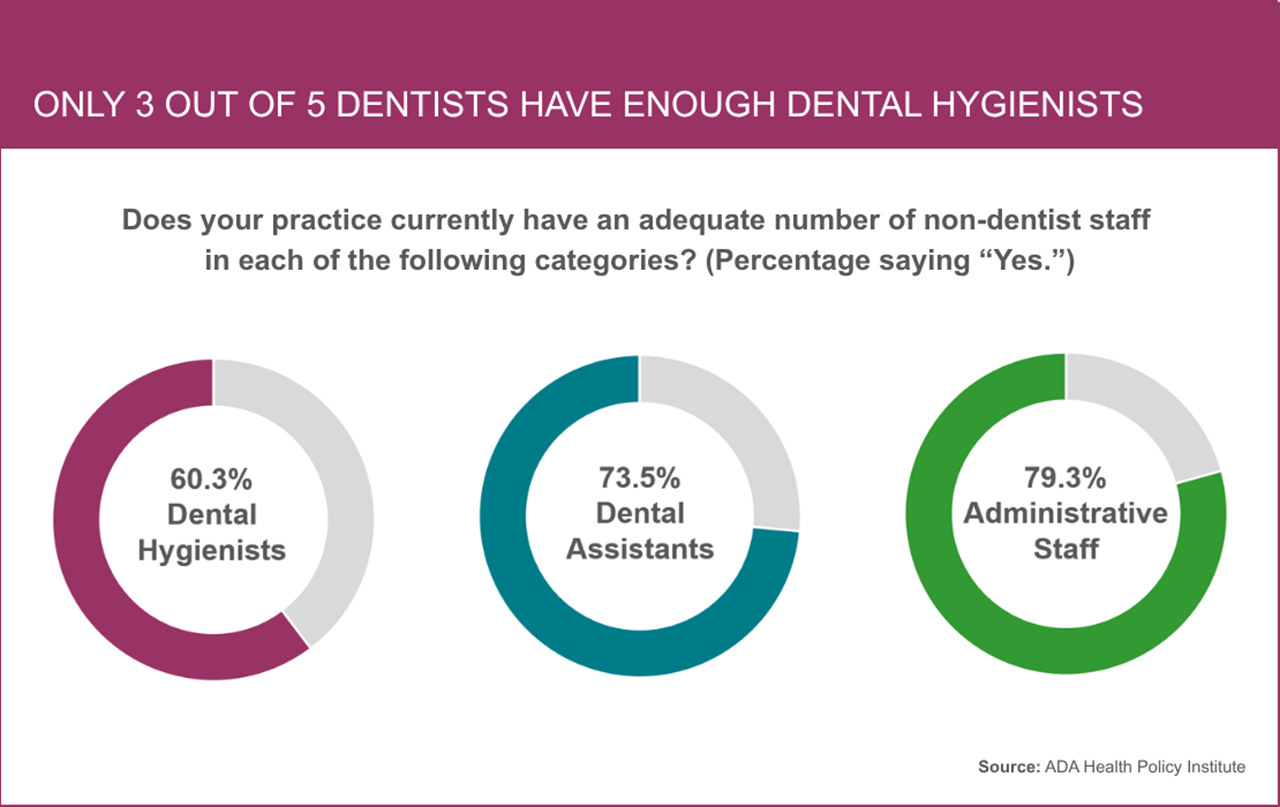
- The American Dental Association’s Health Policy Institute reports that only 60.3% of dentists say they have an adequate number of dental hygienists on staff.
- After a brief dip, the number of working dental hygienists in the United States is rising again.
- The United States has 3.26 hygienists per 5,000 people. Compared with the pre-pandemic peak, this means there are effectively now 6,675 hygienists missing from the workforce compared with 2019.
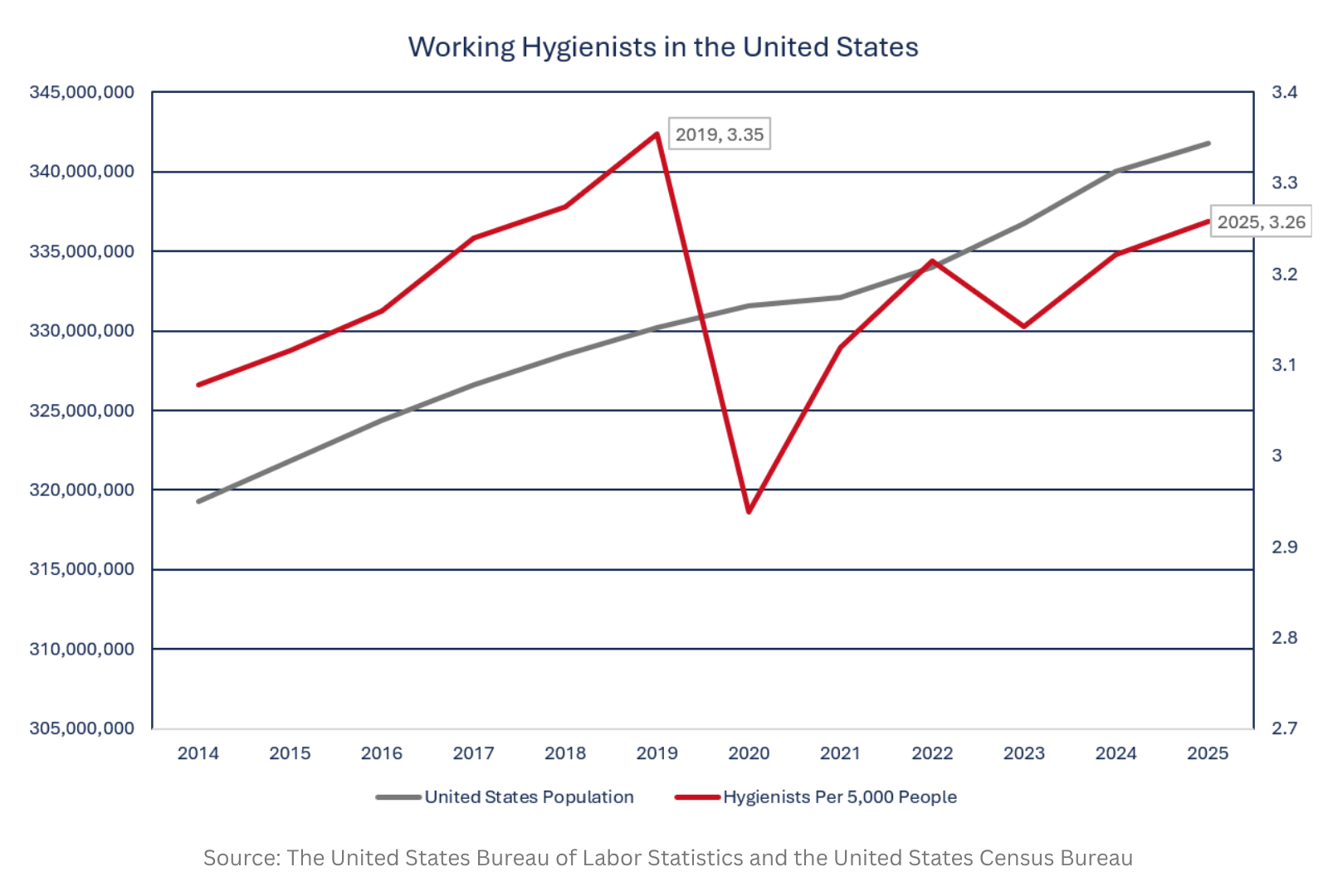
Source: The United States Bureau of Labor Statistics and the United States Census Bureau
- The Health Resources and Services Administration predicts that the United States will need an additional 33,220 full-time hygienists to meet demand.
- Enrollment in hygienist education programs is rising, as are the number of graduates, but several limiting factors slow this process. New programs require accreditation, and expansions for existing programs can require substantial capital investment.
Core State Facts
- Georgia dentists routinely report difficulty hiring hygienists to the Georgia Dental Association, and increasing the size and improving the distribution of Georgia’s hygiene workforce is a legislative priority.
- The number of working hygienists in Georgia follows a similar trend to national patterns; however, growth in Georgia’s hygienist workforce has historically been more tepid than the national trend. The state has made a full recovery compared with its 2018 peak, but progress has leveled off in the last several years.
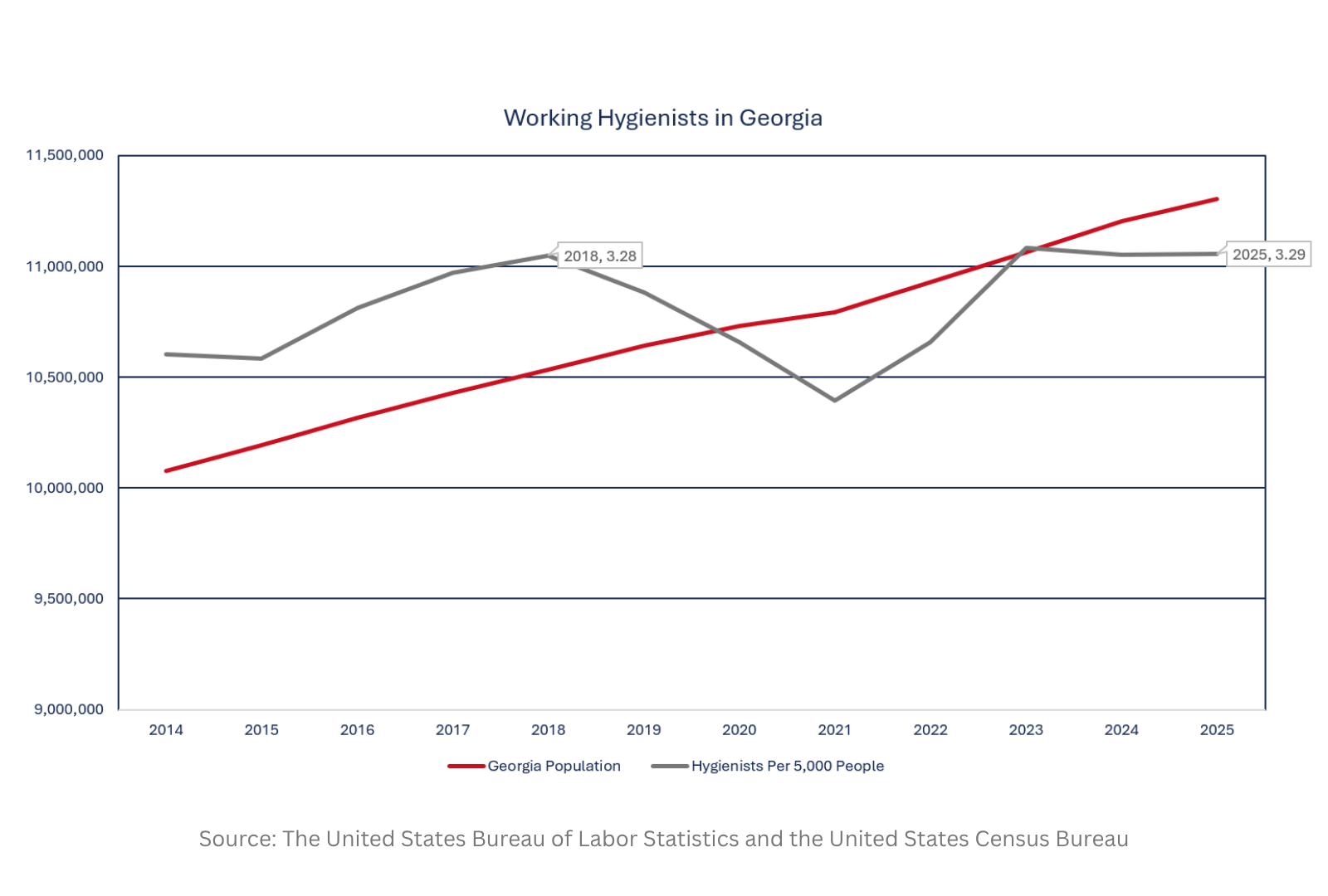
- Distribution makes a difference. Georgia’s urban and suburban counties average 70 hygienists per 100,000 people, but the state’s rural counties only have 48.
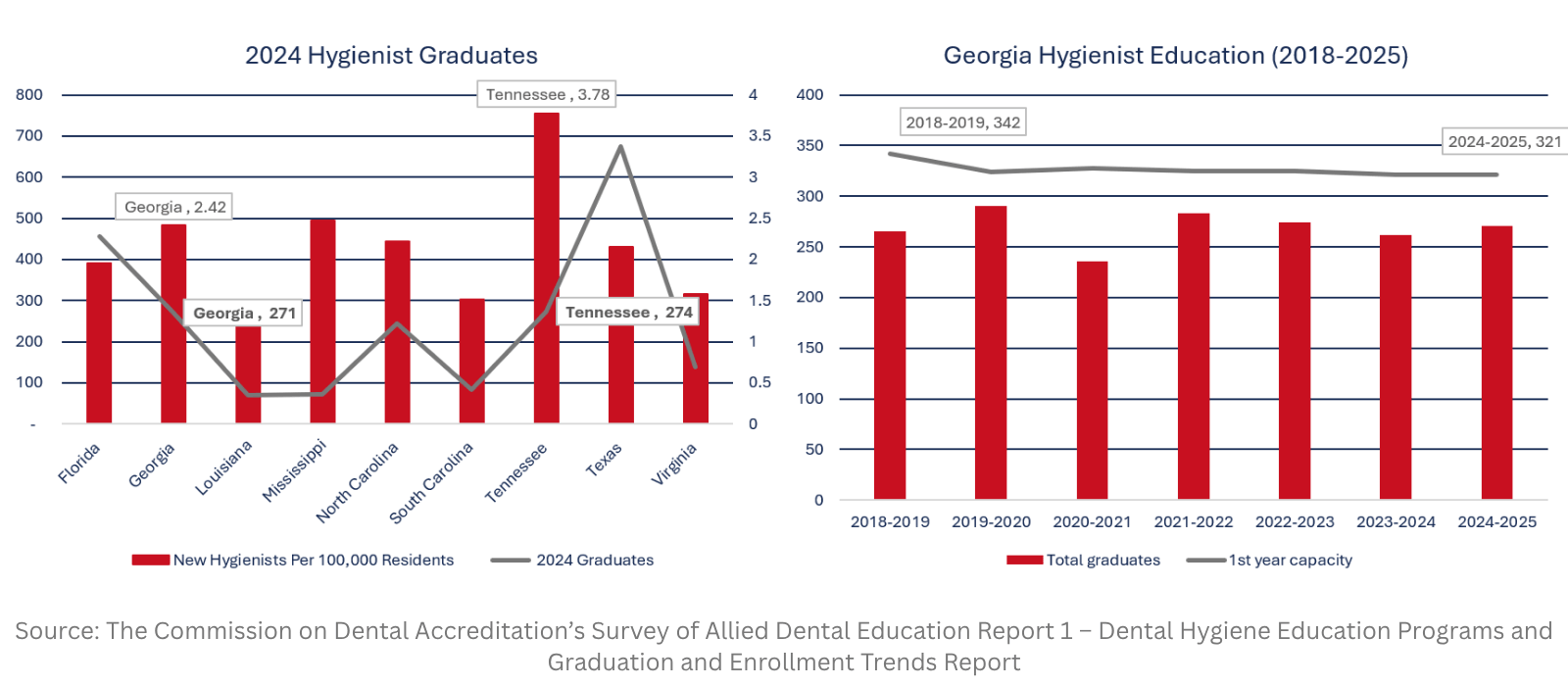
- Georgia, a state where HRSA predicts a shortage over 1,000 full-time hygienists by 2038, had fewer graduates than Tennessee in 2024. On a per capita basis, Tennessee educates substantially more hygienists than Georgia, and HRSA projections predict it will have an adequate supply of dental hygienists in 2038.
- Despite Georgia’s growing population, its hygiene schools reported a decrease in 1st year educational capacity between 2018 and 2024, and graduating classes have remained stable.
Articles and Related Resources
Inside Georgia Dentistry (Featuring Matt Rossetto)- Addressing Georgia’s Dental Hygiene Shortage
The Dental Hygienist Shortage: A Critical Exploration of ADHA's Latest Advocacy Push
Closing the Gap: Addressing Georgia’s Dental Hygiene Workforce Shortage
A Look at the Georgia Dental Hygiene Workforce Shortage in 2027
We Have a Major Dental Hygienist Shortage. It's Unlikely to Go Away Soon. (ADA HPI Perspectives)
Georgia Board of Healthcare Workforce Dental Workforce Reports
