ADA Update | April 2026
Non-covered Services
Dear ADA: Non-covered services
The latest installment of the ADA News’ Dear ADA series addresses non-covered services. Forty-four states have non-covered services laws prohibiting plans from dictating a provider’s fee for procedures that are not covered under the plan; however, if a service is covered but not paid because plan conditions were not met, you may still be bound to the contracted fee based on the definition of a covered service in your state. Many dentists assume “covered” means “paid.” In most state laws, however, a covered service is defined by benefit eligibility, not by whether a claim was ultimately paid.
Dentistry News
Reducing Opioid Refills Post-surgery
Investigators may have uncovered the factors contributing to opioid refill prescriptions following otolaryngology-head and neck surgery.

ADA Foundation Launches Disaster Relief Fund
The ADA Foundation has launched a new grant program to support state dental associations and their affiliated foundations as they assist dentists impacted by natural disasters.
How to Avoid Holiday Heart Syndrome
Holiday-related stressors may put strain on the heart in what experts have dubbed holiday heart syndrome.

Q&A: Your Student Loan Questions, Answered
Attendees asked more than 60 questions during a January webinar on the One Big Beautiful Bill Act and its implications for dentists and dental students. Hosted by the American Dental Association and Laurel Road, now KeyBank, the webinar can be viewed in its entirety on the ADA’s YouTube page.
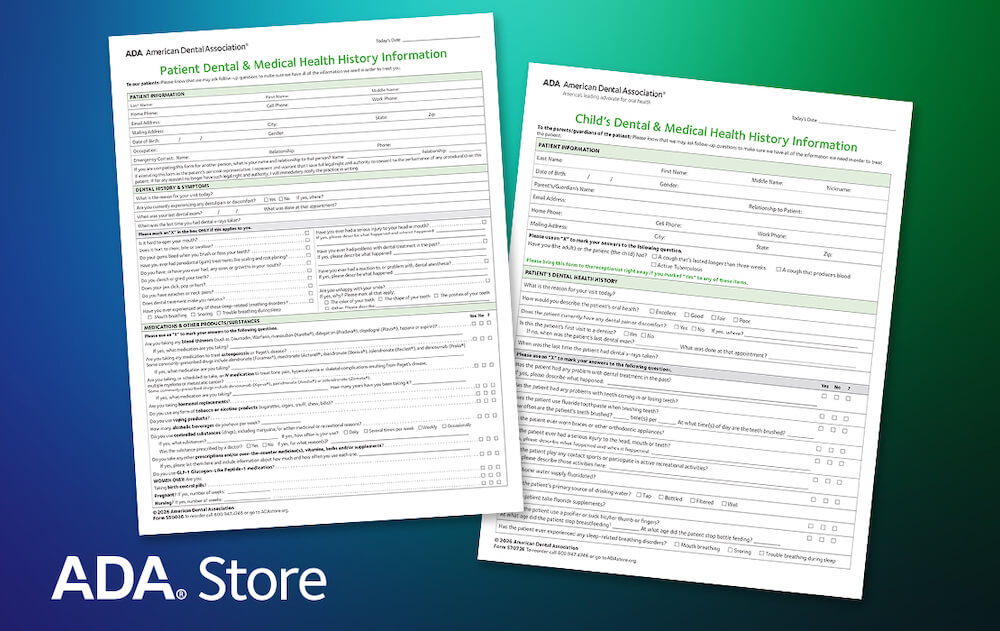
ADA Adds Mental Health, GLP-1 Questions to Health History Forms
Updated patient health history forms from the American Dental Association include a new screening question related to mental health and the addition of GLP-1 receptor agonists to the list of medications patients may be taking.
April is Oral Cancer Awareness Month
- Oral cancer information from MouthHealthy.org
- Information about the HPV Vaccine from MouthHealthy.org
- Watch this video from a patient named Sandy Wexler, who shares how her ADA dentist saved her life
Find more free resources for patients at MouthHealthy.org