
Laser Endodontic Ablation Procedure (LEAP)
Laser Endodontic Ablation Procedure (LEAP): A Novel Approach to Root Canal Disinfection Using the Picasso Pro Diode Laser
By: Rico D. Short, DMD, BCE, FICD
The field of endodontics is always changing. Is it time to “LEAP” into something new?
Root canal therapy has one primary biological objective: elimination of microorganisms from the root canal system and prevention of reinfection. While advances in instrumentation, irrigation, and obturation have dramatically improved clinical outcomes, complete disinfection of the root canal system remains a significant challenge.
The complexity of root canal anatomy—including fins, isthmuses, lateral canals, apical ramifications, and dentinal tubules—creates areas that are difficult or impossible to instrument mechanically. As a result, clinicians rely heavily on chemical irrigation, particularly sodium hypochlorite, to reduce bacterial contamination.
Although sodium hypochlorite remains the gold standard irrigant because of its antimicrobial and tissue-dissolving properties, it is not without limitations. Cytotoxicity, unpleasant taste and odor, risk of extrusion accidents, open apices, incompatibility with certain irrigants, and incomplete penetration into complex anatomy continue to challenge clinicians.
As endodontics moves toward more conservative shaping and biologically driven treatment protocols, new technologies are emerging that seek to improve disinfection while preserving tooth structure. One such innovation is the Laser Endodontic Ablation Procedure (LEAP), performed using the Picasso Pro diode laser system by AMD.
Challenges of Current Disinfection Strategies
The success of root canal therapy is closely tied to microbial control. However, bacteria are not confined to the main canal lumen. Microorganisms can colonize dentinal tubules and anatomical irregularities beyond the reach of traditional instrumentation.
To address this challenge, clinicians have adopted a variety of activation systems, including sonic, ultrasonic, and laser-assisted irrigation techniques. These technologies are designed to improve irrigant penetration and enhance cleaning efficiency.
While these systems may improve irrigant distribution, they remain dependent on chemical irrigants and do not necessarily guarantee complete bacterial elimination. Additionally, many advanced irrigation platforms require significant capital investment, may increase procedural complexity, and treatment time.
Consequently, there is ongoing interest in technologies that combine mechanical, chemical, and energy-based approaches to improve canal disinfection while maintaining efficiency and affordability.
What Is LEAP?
Laser Endodontic Ablation Procedure (LEAP) is a disinfection protocol that combines a specialized diode laser tip with a proprietary irrigation solution. The objective is to utilize both physical and chemical mechanisms to reduce bacterial contamination throughout the root canal system while maintaining safety.
The protocol utilizes the Picasso Pro diode laser, an 810-nm laser platform capable of performing multiple soft-tissue and endodontic procedures. A specially designed LEAP tip is attached to the laser handpiece and advanced into the canal following instrumentation. The tip contains a proprietary material that converts laser energy into heat, allowing localized thermal ablation of residual tissue and bacteria within the canal space.
Unlike traditional laser-activated irrigation systems that primarily agitate irrigants, the LEAP concept emphasizes direct thermal effects combined with subsequent chemical disinfection.
The LEAP Workflow (Figure 1.)
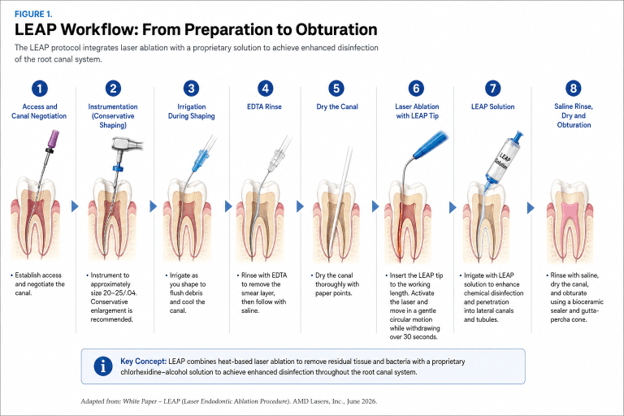
The LEAP protocol follows a straightforward clinical sequence:
1. Access and canal negotiation.
2. Instrumentation to approximately a size 20–25/.04 preparation.
3. Irrigation during shaping.
4. EDTA rinse and canal drying.
5. Laser ablation using the LEAP tip.
6. Placement of LEAP irrigating solution.
7. Saline rinse and drying.
8. Obturation.
One notable aspect of the protocol is its emphasis on conservative shaping. Because the laser tip measures approximately 200 microns in diameter, extensive enlargement of the canal may not be necessary to achieve apical access. This concept aligns with the growing trend toward minimally invasive endodontics and preservation of radicular dentin.
The Picasso Pro Platform (Figure 2.)
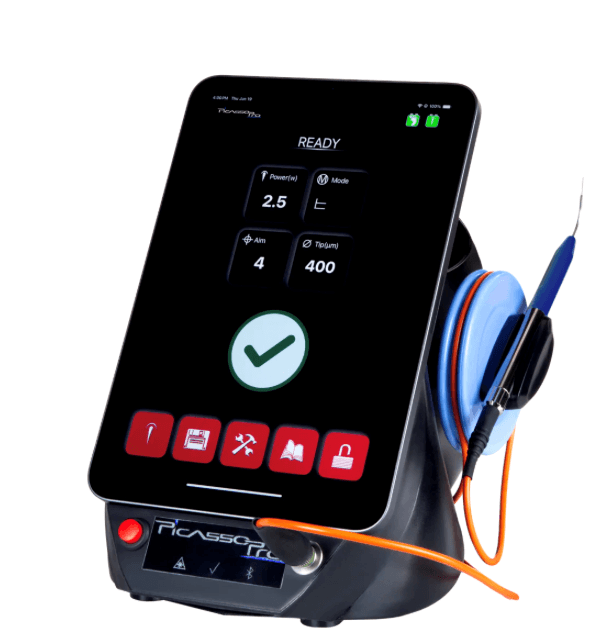
The Picasso Pro is an 810-nm diode laser designed for multiple clinical applications, including soft-tissue surgery, periodontal procedures, photobiomodulation, whitening, and endodontics. The system is controlled through a mobile application interface (a mini iPad) and incorporates wireless operation features (a Bluetooth controlled foot pedal).
For endodontic use, the platform employs disposable LEAP tips specifically designed for root canal disinfection. The versatility of the system may be attractive to general dentists and specialists because the laser can be utilized for a variety of procedures beyond endodontics.
The Role of the LEAP Solution (Figure 3.)
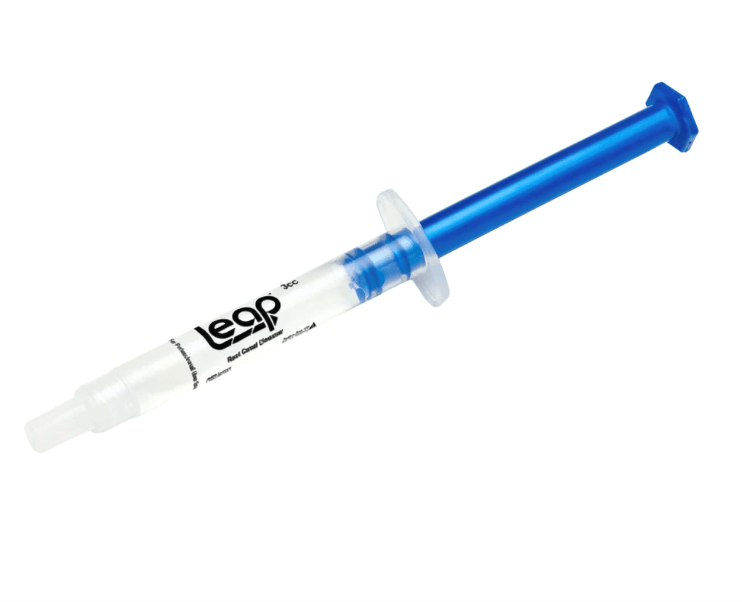
The protocol also incorporates a proprietary irrigating solution containing chlorhexidine and alcohol. According to the developers, this combination is intended to provide antimicrobial activity while reducing surface tension, potentially enhancing penetration into lateral canals and dentinal tubules.
Lower surface tension may improve wetting characteristics and facilitate irrigant distribution throughout complex canal anatomy. The solution is used following laser ablation as part of the overall disinfection strategy.
Safety Considerations
One concern frequently raised regarding intracanal laser use is heat generation and the potential for damage to surrounding periodontal tissues.
The LEAP developers evaluated temperature changes at cervical, middle, and apical root locations during laser activation. Reported temperature measurements remained below the threshold generally associated with periodontal ligament injury. Histologic evaluation also suggested preservation of cementum and periodontal ligament integrity under the tested conditions.
As with any energy-based technology, clinicians should follow manufacturer-recommended protocols and receive appropriate training before clinical implementation.
Current Evidence
The most intriguing aspect of LEAP is its reported antimicrobial performance.
In vitro investigations demonstrated bacterial reductions exceeding 99.99% against Enterococcus faecalis biofilms. Subsequent in vivo studies reported bacterial reductions approaching 99.999% when the complete LEAP protocol was utilized.
Clinical observations also reported favorable postoperative outcomes, with substantial reductions in pain and symptoms following treatment.
While these findings are encouraging, it is important to recognize that long-term outcome studies remain essential. As with any emerging technology, broader clinical validation, multicenter investigations, and long-term healing assessments will ultimately determine its place in routine endodontic practice.
Clinical Implications
The future of endodontics will likely involve a combination of conservative instrumentation, enhanced disinfection, and biologically driven treatment strategies.
The LEAP protocol represents an attempt to address several persistent challenges simultaneously:
- Enhanced disinfection of complex anatomy
- Reduced reliance on sodium hypochlorite
- Conservative canal shaping
- Simplified workflow
- Expanded use of diode laser technology in endodontics
For clinicians already incorporating lasers into their practices, LEAP offers an additional application that may complement existing treatment protocols. For those considering laser integration, the ability to utilize a single platform across multiple disciplines—including soft-tissue management, photobiomodulation, and endodontics—may improve overall value and versatility.
Conclusion
Root canal disinfection remains one of the most important determinants of endodontic success. Despite significant advances in irrigation and instrumentation, complete elimination of microorganisms from the root canal system continues to be a clinical challenge.
The Laser Endodontic Ablation Procedure (LEAP) introduces a novel approach that combines thermal ablation with chemical disinfection through the use of the Picasso Pro diode laser and a proprietary irrigation protocol. Early laboratory and clinical data suggest promising antimicrobial effectiveness while supporting minimally invasive shaping concepts.
As additional research becomes available, LEAP may represent an important step toward more predictable, efficient, and biologically focused root canal therapy. Regardless of future developments, innovations such as LEAP highlight the ongoing evolution of endodontics and the profession's commitment to improving patient outcomes through science and technology.
Disclosure: Dr. Rico D. Short is an independent expert clinical evaluator for various dental companies. He serves as a consultant, educator, and key opinion leader for AMD Lasers. The author has experience using the Picasso Pro laser system in clinical practice. The views expressed in this article are intended for educational purposes and are based on currently available evidence and clinical experience. Clinicians should exercise their own professional judgment and evaluate emerging technologies in the context of individual patient needs and treatment goals. There is more evidence based research in progress utilizing the LEAP concept.
References
1. Siqueira JF Jr, Rôças IN. Present status and future directions in endodontic microbiology. Endodontic Topics. 2014;30(1):3-22.
2. Nair PNR. On the causes of persistent apical periodontitis: a review. International Endodontic Journal. 2006;39(4):249-281.
3. Peters OA. Current challenges and concepts in the preparation of root canal systems: a review. Journal of Endodontics. 2004;30(8):559-567.
4. Gomes BPFA, Aveiro E, Kishen A. Irrigants and irrigation activation systems in endodontics. Brazilian Dental Journal. 2023.
5. Lazzarotto DJ, et al. Use of the GentleWave system in endodontics: A scoping review. Brazilian Journal of Oral Sciences. 2025.
6. Jaramillo DE, et al. SEM and bacteriological evidence of laser-activated irrigation compared to ultrasonic-activated irrigation: A pilot study. Dentistry Journal. 2025;13(5):195.
7. Patterson SB. Bactericidal efficacy of EdgePRO Er,Cr:YSGG laser-activated irrigation against a mature endodontic multispecies biofilm using an in vitro infected tooth model. Indiana University-Purdue University Indianapolis; 2024.
8. Leonardo RT, Cintra LTA, Jacinto RC, et al. Assessment of cleaning and antimicrobial effectiveness of laser ablation with indocyanine green against Enterococcus faecalis biofilm in root canals. Dental Press Endodontics. 2023;13(2):76-100.
9. Yamamoto LY, Loureiro C, Cintra LTA, et al. Antibiofilm activity of laser ablation with indocyanine green activated by different power laser parameters compared with photodynamic therapy on root canals infected with Enterococcus faecalis. Photodiagnosis and Photodynamic Therapy. 2021;35:102377.
10. Leonardo RT, García Puente C, Berbert FLCV, et al. Clinical study of antimicrobial efficacy of laser ablation therapy with indocyanine green in root canal treatment. Journal of Endodontics. 2023.
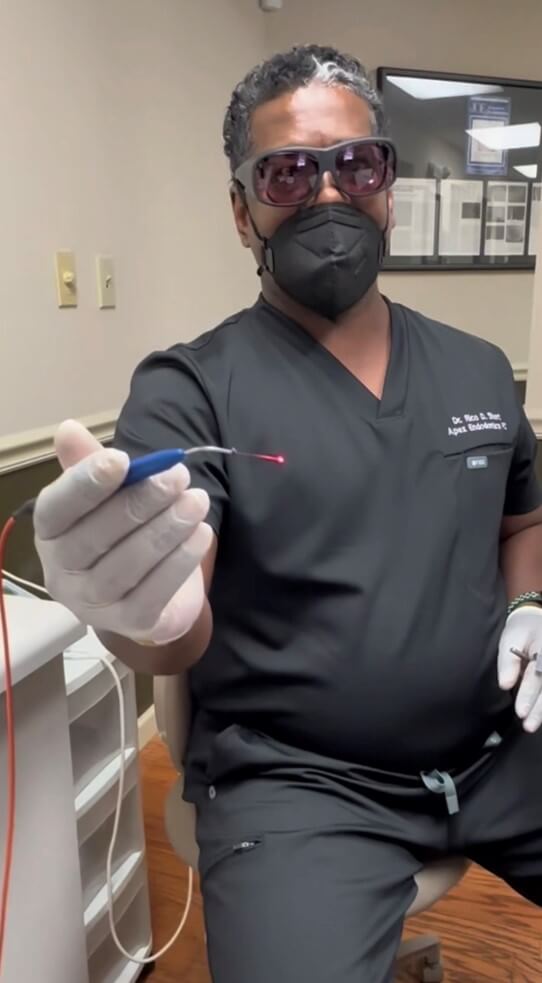
Dr. Short holding the laser tip.
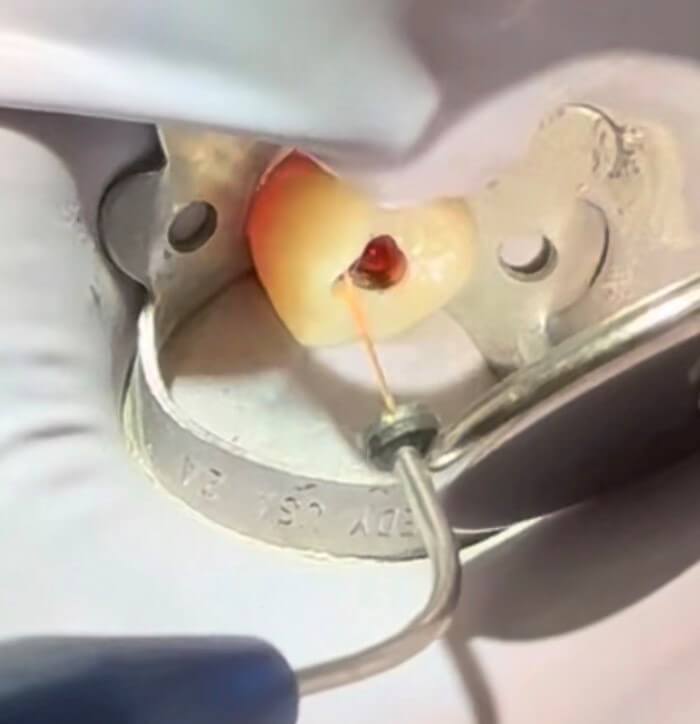 The laser in action on Dr. Short's patient.
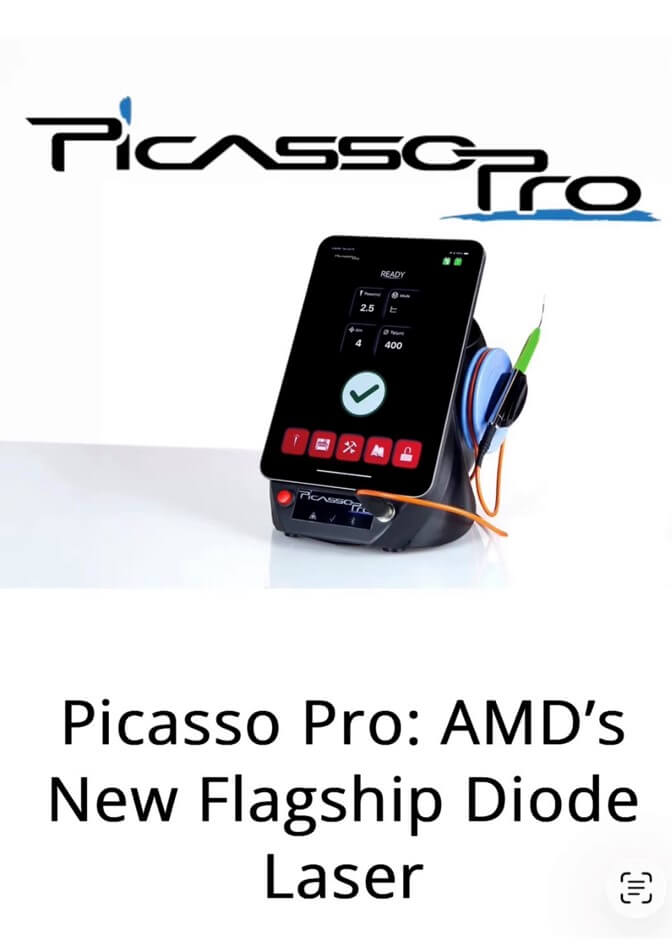 Photo of laser
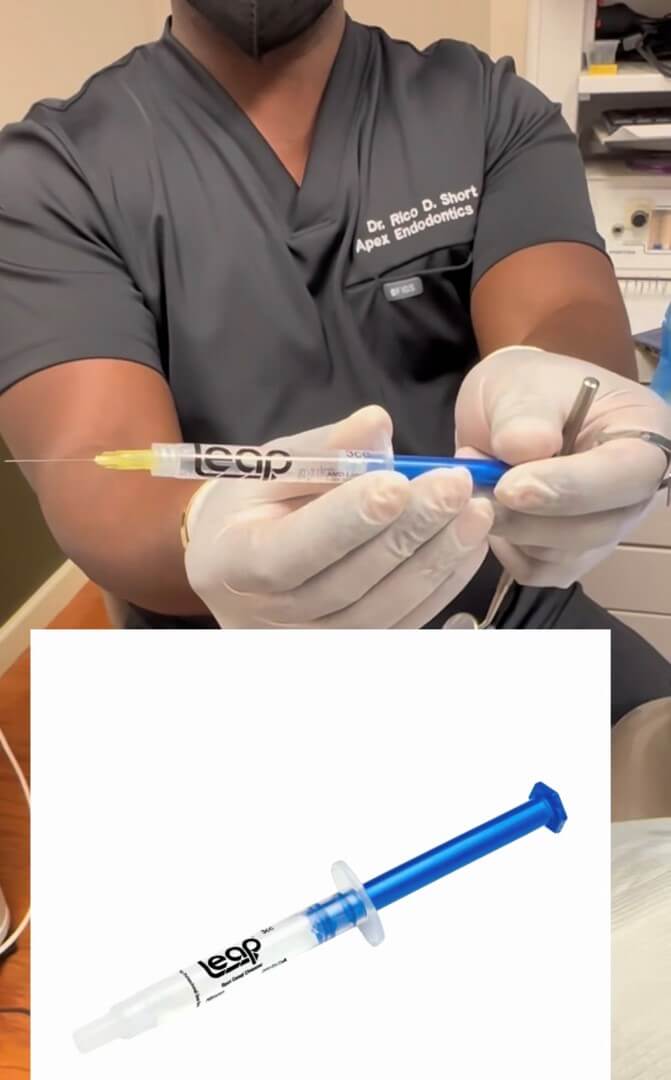 Dr. Short holding the LEAP Irrigation Solution.
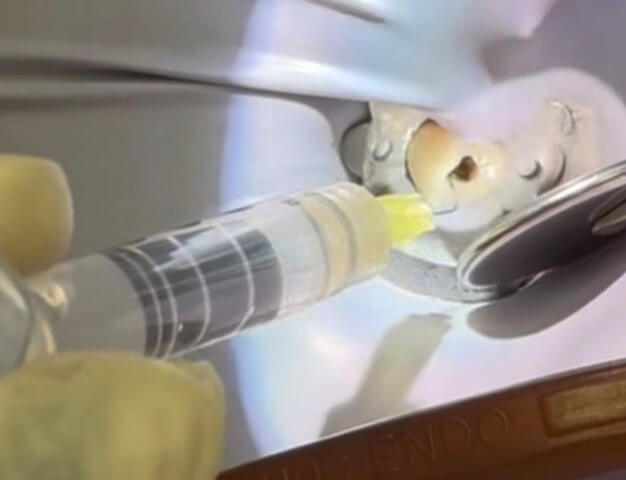 LEAP Irrigation Solution in tooth